

About Music Therapy
Music therapy is an evidence-based healthcare practice that uses music intentionally to support physical, emotional, cognitive, and social well-being. Conducted by a board-certified music therapist, sessions are designed to meet the unique needs of each individual or group.
For older adults, music has a powerful ability to unlock memories, improve mood, and create meaningful connections. Because music is processed in many areas of the brain, it often remains accessible even when other abilities decline due to aging or neurological conditions.
Through singing, listening, instrument play, movement, and guided musical experiences, music therapy helps older adults stay engaged, express themselves, and experience moments of joy and connection.
Music Therapy in Action
“There was a resident I worked with who had several strokes and spoke only short words and phrases on rare occasions. I began singing 'Let Me Call You Sweetheart' and paused at the end of the first line to see if he would sing the last word. He hesitated — then sang it. Then he sang the entire song with me. Afterward, he was able to answer a couple of yes or no questions, and flashed a big smile.”
-Emily Cornish, MT-BC
Why Work With a Board-Certified Music Therapist
Music therapy is not music entertainment.
While listening to live or recorded music can be uplifting, it is not the same as music therapy. Board Certified Music Therapists (MT-BC) complete an accredited degree program, a 1,040-hour supervised clinical internship, and must pass a national board exam. We are clinically trained to assess each individual's emotional, psychological, cultural, and spiritual background and tailor every intervention accordingly — including making real-time decisions about what a client needs in the moment.
Music therapy is also an evidence-based practice. Every session is built around specific, measurable goals — whether that's improving breath support, reducing anxiety, stimulating memory recall, or increasing socialization. It's much more than playing music with clients, although that's certainly part of the joy.
Working with a board-certified music therapist ensures that services are:
Clinically Informed
Sessions are designed using evidence-based practices that support cognitive, emotional, and physical well-being.
Personalized
Music selections and activities are tailored to each client’s abilities, health conditions, and personal music preferences.
Goal-Oriented
Sessions may focus on specific outcomes such as increased engagement, reduced anxiety, improved mood, or cognitive stimulation.
Professional and Reliable
A trained therapist understands how to work safely and effectively with older adults in healthcare environments.
Music therapy is more than entertainment—it is a structured therapeutic approach designed to support quality of life.
Benefits for Seniors
Supporting Cognitive Health and Memory
Music therapy can be especially beneficial for individuals living with memory loss, including those with Alzheimer’s disease and other forms of Dementia.
Familiar songs often trigger long-term memories and emotional responses, allowing individuals to reconnect with meaningful experiences from their lives. In many cases, individuals who struggle with conversation may still be able to sing lyrics or respond rhythmically to music.
Music therapy sessions may help:
Stimulate memory recall
Increase alertness and engagement
Reduce confusion and agitation
Support communication and emotional expression
Emotional and Social Benefits
Aging, illness, and transitions into care environments can lead to isolation, anxiety, or depression. Music therapy creates opportunities for meaningful interaction and emotional support.
Group sessions foster community by encouraging residents to sing together, share memories connected to music, and participate in collaborative musical activities. These shared experiences often lead to laughter, storytelling, and renewed social connection.
Music therapy can help:
Reduce anxiety and agitation
Improve mood and emotional well-being
Increase social interaction
Provide comfort and stress relief
Physical Engagement and Quality of Life
Music also supports physical engagement. Rhythmic movement, instrument play, and guided exercises can encourage mobility, coordination, and gentle physical activity appropriate for older adults.
For individuals receiving palliative or hospice care, music therapy can provide comfort, relaxation, and emotional support for both clients and their families during meaningful moments.
Personalized and Meaningful Experiences
Every music therapy session is tailored to the preferences, abilities, and goals of the participants. Music from a client’s life history—favorite songs, artists, and cultural traditions—often becomes the foundation of the therapeutic experience.
By meeting individuals where they are, music therapy helps create moments of connection, dignity, and joy that enhance overall quality of life.
What a Typical Music Therapy Session Looks Like
Music therapy sessions can be offered in group settings or individual sessions, depending on the needs of the facility and residents.
Group Sessions
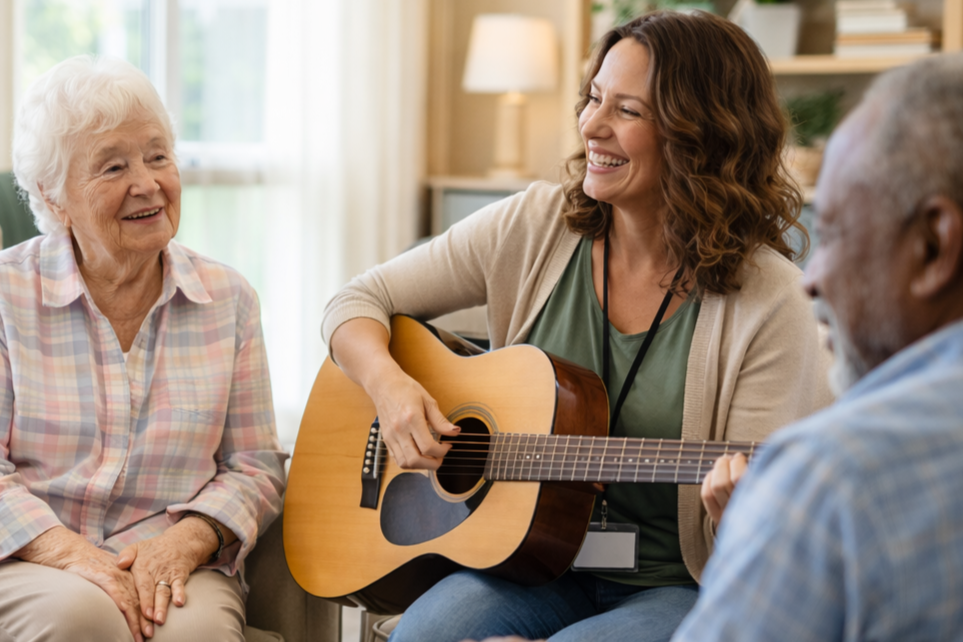
Group music therapy sessions are interactive and engaging. Residents participate in a variety of musical experiences designed to encourage connection and participation.
A typical group session may include:
Singing familiar songs from different eras
Playing simple percussion instruments
Musical games and rhythm activities
Movement to music or gentle exercise
Reminiscence and storytelling connected to songs
These sessions are designed so that residents of many ability levels can participate and experience success.
Individual Sessions
Individual music therapy sessions provide more personalized support and are often used for residents who may benefit from one-on-one attention.
These sessions may focus on:
Memory stimulation and reminiscence
Emotional support and self-expression
Relaxation and anxiety reduction
Support during palliative or hospice care
The music therapist carefully selects music based on the resident’s personal history, preferences, and therapeutic goals.
Why Music Works for Memory Care
Music has a unique ability to reach individuals living with memory loss. Even when cognitive abilities decline, the brain often retains the ability to recognize and respond to music. Because music is processed in multiple areas of the brain—including those related to memory, emotion, and movement—it can remain accessible even in later stages of neurological conditions.
For individuals living with Alzheimer’s disease and other forms of Dementia, familiar songs can unlock powerful memories and emotional responses. A song from a person’s young adulthood may instantly bring back feelings, memories, or even the ability to sing along when spoken conversation is difficult.
Music therapy uses these preserved musical abilities in intentional ways to help residents stay engaged and connected.
Accessing Long-Term Memories
Many musical memories are stored alongside emotional experiences. When a familiar song is heard, it can trigger memories connected to meaningful life moments such as dances, celebrations, relationships, or cultural traditions.
Residents who struggle with short-term memory may still recall lyrics from songs they learned decades ago. Singing these songs can create moments of recognition, confidence, and joy.
Supporting Communication
Individuals in memory care may experience difficulty finding words or expressing their thoughts. Music provides an alternative pathway for communication.
Through dynamically cued singing, rhythmic responses, and musical interaction, residents can express themselves and connect with others even when traditional conversation becomes challenging.
Reducing Anxiety and Agitation
Music can also have a calming effect on the nervous system. Familiar and preferred music can help reduce restlessness, agitation, and anxiety that are sometimes associated with memory loss.
Music therapy sessions often provide a structured, predictable experience that helps residents feel safe and supported.
Creating Moments of Connection
Perhaps most importantly, music therapy creates meaningful moments of connection. Residents who may otherwise appear withdrawn often become more alert, responsive, and socially engaged during musical activities.
These moments can be deeply meaningful not only for residents, but also for caregivers and family members who witness their loved ones reconnect through music.
Through intentional musical experiences, music therapy helps individuals living with memory loss continue to experience joy, dignity, and human connection.
See What Music Therapy Can Do for Your Residents
The best way to understand the impact is to experience it firsthand. Reach out to learn about scheduling, pricing, or to request a complimentary session for your community.